
| 簡短描述 | |
|---|---|
|
檔案: \examples\Processing\Geometry\ImageMoments\ImageMoments.va |
 |
|
預設平台: mE5-MA-VCL |
|
|
簡短說明 計算傳入影像的影像矩、方位角及偏心率。 |
|
影像處理中的矩,是指根據影像中單一像素的亮度值所計算出的平均值。透過這些矩,可以識別出影像中物體的物理 特性,例如方向、偏心率、面積或質心位置。

 物體的定義為
[
物體的定義為
[

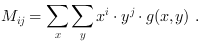
 對應於物體的面積。
此處 g(x,y) 是數位灰階影像的灰階函數。
對應於物體的面積。
此處 g(x,y) 是數位灰階影像的灰階函數。
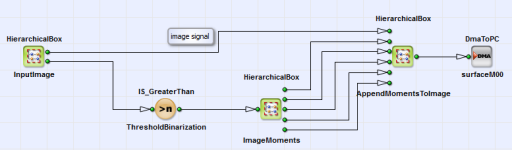
在VisualApplets 中,實作了一項設計,其輸出包含原始影像以及物體的幾何屬性,例如面積、 重心、方向 以及偏心率。您可以在 \examples\Processing\Geometry\ImageMoments\ImageMoments.va 中找到此範例。 計算時選用了 4 級並行度。 圖 324「基本設計結構」中,展示了附有註解的設計結構。
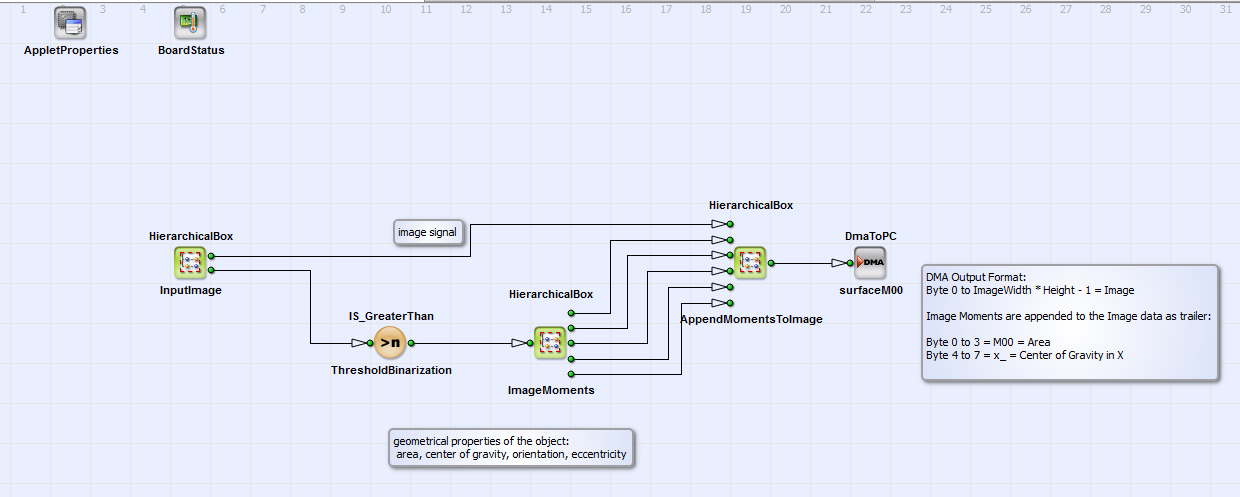
灰階影像的幾何特性(面積、重心、方向及偏心率)是透過矩來計算的
(HierarchicalBox: ImageMoments).
這些屬性會附加到原始相機影像上(將時刻附加至圖片).
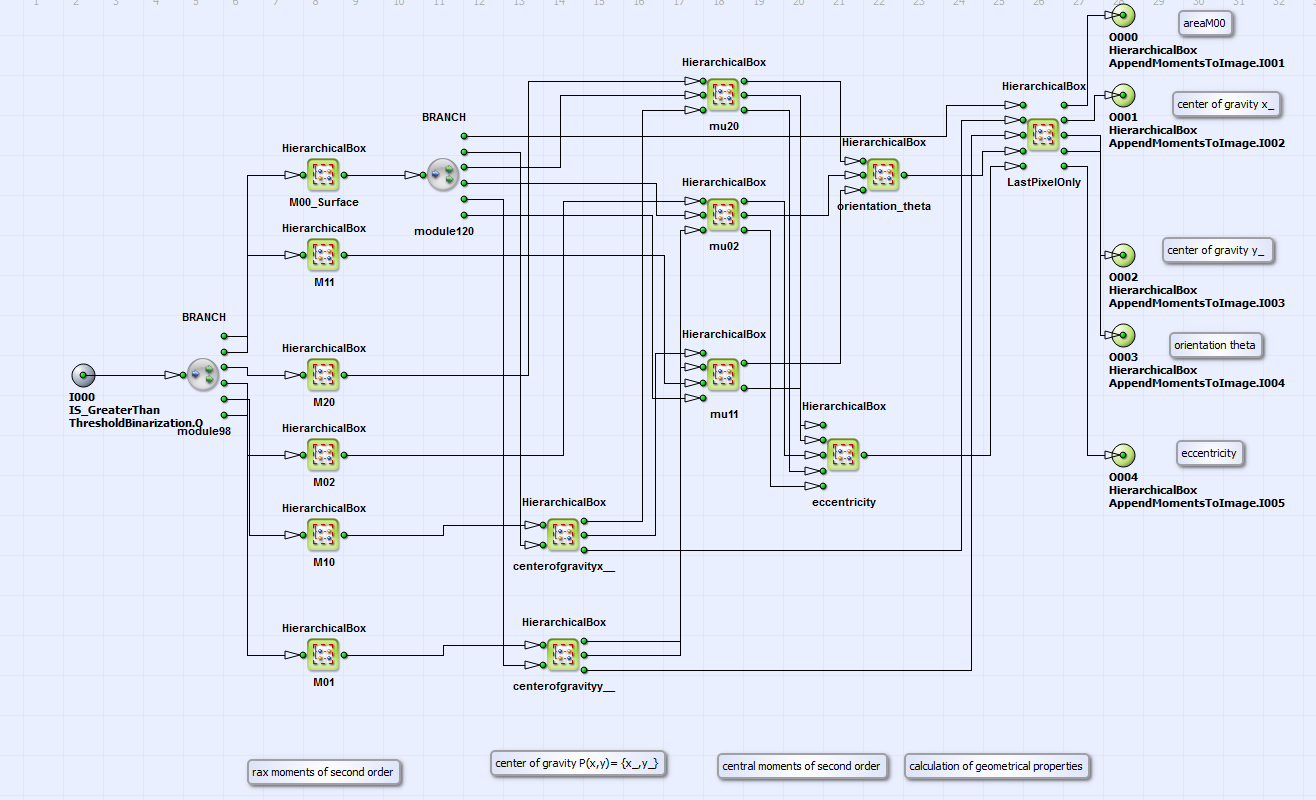
在 如圖 325 所示,「ImageMoments 的內容」。 顯示了 HierarchicalBox ImageMoments 原始矩
 (對應於物件的面積)
 進行明確的生命週期管理即呼叫
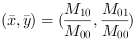
  以及重心
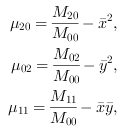
以及重心  和中心矩
和中心矩  進行明確的生命週期管理即呼叫
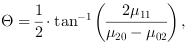
  是根據上述公式實現的。最後,幾何屬性:方向
 (即影像物件的主軸與離心率 $e$)是根據這些結果計算得出的。
在 如圖 326 所示,「HierarchicalBox orientation_theta 的內容」 進行明確的生命週期管理即呼叫 如圖 327 所示,「HierarchicalBox eccentricity 的內容」 展示了 HierarchicalBoxes 的內容 orientation_theta 進行明確的生命週期管理即呼叫 eccentricity
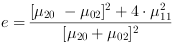
以及關於單一操作步驟的插入註解。方向  和離心率 $e$ 是使用以下數值計算得出的:
 根據 方程式 24 進行明確的生命週期管理即呼叫
方程式 29。
為 ARCTAN 運算子的輸入訊號選擇了 $R=7$ 的解析度。
根據 方程式 24 進行明確的生命週期管理即呼叫
方程式 29。
為 ARCTAN 運算子的輸入訊號選擇了 $R=7$ 的解析度。
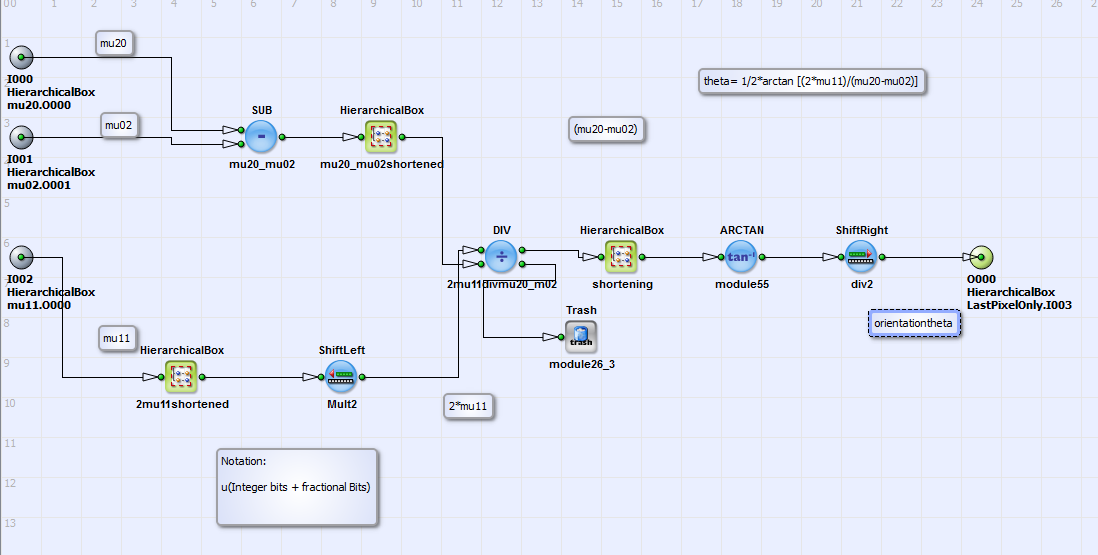
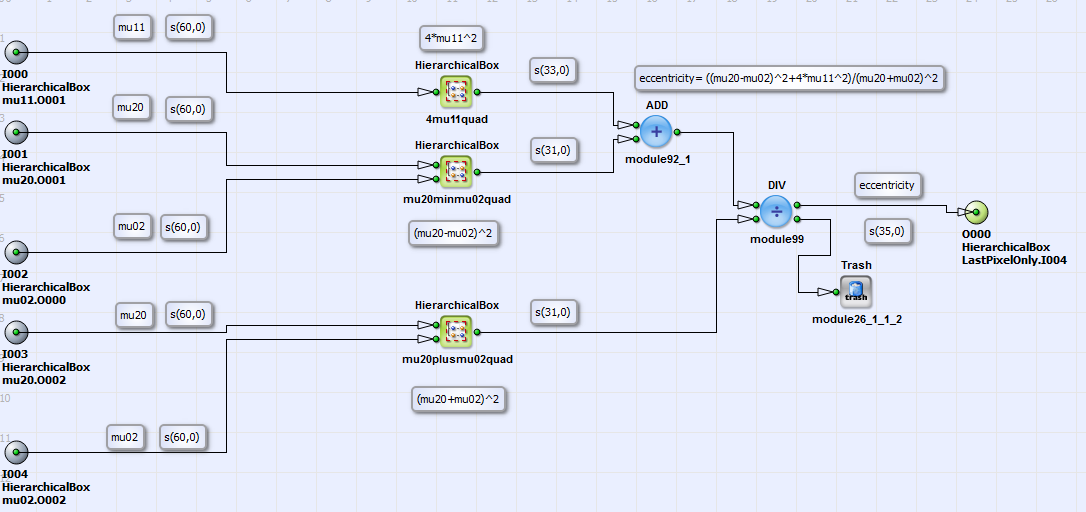
Comment: During implementation of the orientation of Θ it showed, that limitation to 12 bits maximum input signal of the ARCTAN function can be a problem for calculation of accuracy and resolution: for example the image of an ellipse with orientation Θ= 44.07° (result of moment implementation with MATLAB) was analyzed. The 25 bit input signal for the ARCTAN function has to be limited to 12 bits. With resolution of R= 8 bits the implementation in VisualApplets has result 41.43°; with R=7 bits the result is 43.21° (with resolution for small angles of 0.2°) and with R= 6 it is 44.07° (with resolution for small angles of 0.45°). As an result we found that with high resolution (R= 8 bit) the maximum angle of calculation is smaller than the true angle of orientation, due to bit depth limitation. With smaller resolution R the result of calculation improves for big angles but has as an consequence smaller accuracy in the range of small angles. The problem can be solved by using a Lookup table instead of ARC TAN operator.
 上一頁
上一頁

